What is Yagasalai and Why is it Important in Kumbabishekam? — A Complete Guide
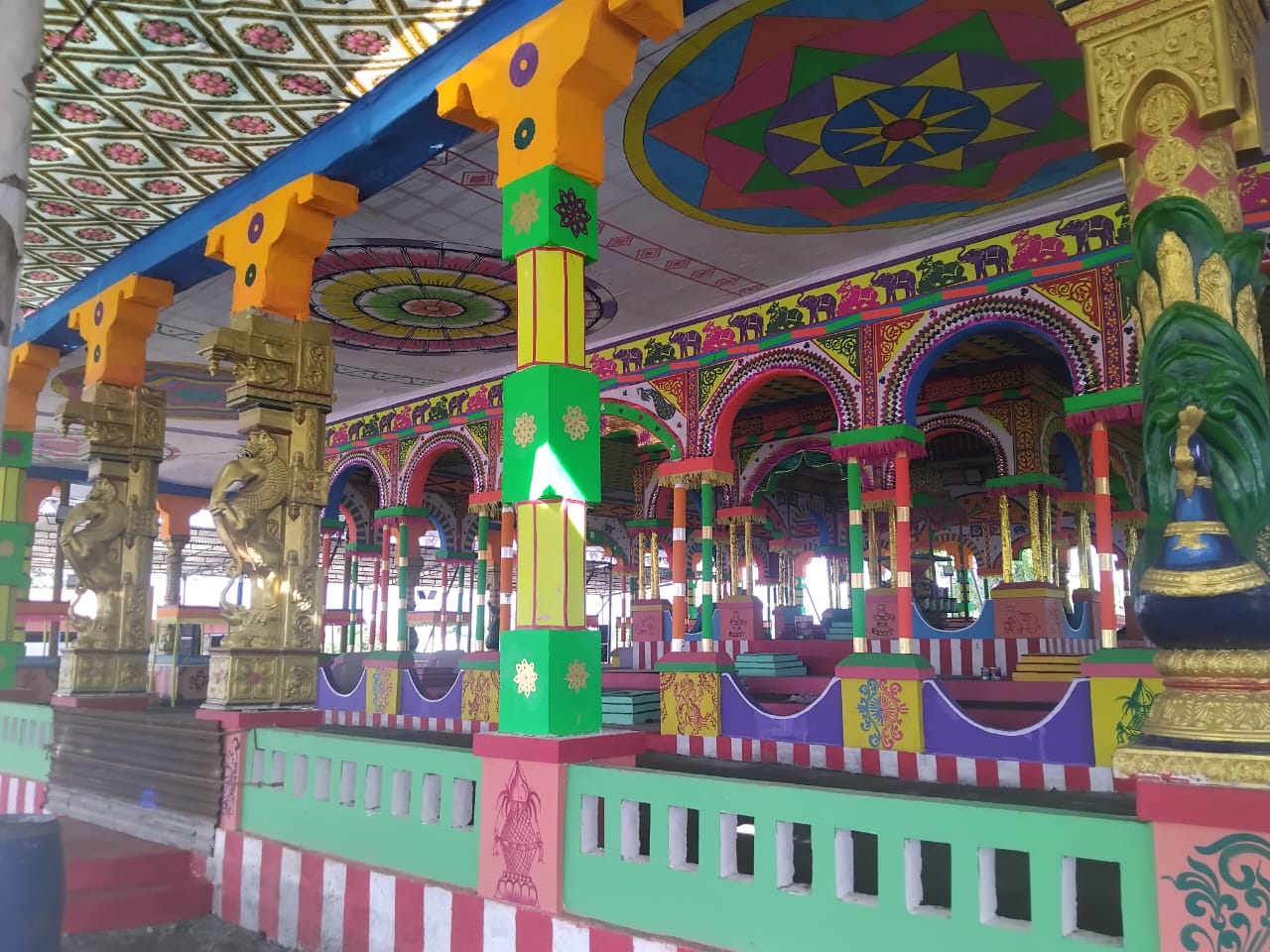
What is a Yagasalai?
A **Yagasalai** (also spelled Yaga Shala, Yajna Shala, or Yagasala) is a specially constructed sacred pavilion where Vedic fire rituals — Yagnam, Homam and Agnihotra — are performed. In the Tamil temple tradition, the Yagasalai is the spiritual heart of every Kumbabishekam, Maha Yagnam, Brahmotsavam and major festival. Without a properly built Yagasalai, the rituals prescribed by the Agama Shastras cannot be completed.
At **GPS Panthal**, our family has been building Yagasalai structures across Tamil Nadu for four generations — from our grandfather **Kalimuthu** to our father **Gurusamy** and today led by **Sirpakalamani Sthapathi Guru Panchanathan** of Devakottai. We have set up Yagasalai for more than 1,000 temples, and the question we are asked most often is: *“What exactly is a Yagasalai and why is it so important in Kumbabishekam?”*
This guide answers that question in detail.
Yagasalai — Meaning and Purpose
The word **Yaga** means a sacred fire offering, and **Salai** means a hall or pavilion. A Yagasalai is therefore the dedicated *ritual hall* where priests invoke Agni (the divine fire) and offer ghee, herbs, grains and sacred mantras to invite the presence of every deity into the temple.
The purpose of a Yagasalai is fourfold:
This is why traditional teachers say: *no Yagasalai, no Kumbabishekam*.
Why is Yagasalai Important in Kumbabishekam?
**Kumbabishekam** is the most important ceremony in a Hindu temple. It happens every **12 years** to renew the divine energy of the deity. During the 3 to 12 days of Kumbabishekam, the entire spiritual power of the temple flows through the Yagasalai. Here is why the Yagasalai is non-negotiable:
1. The Yagasalai Houses the Sacred Kumbam
The kumbam (sacred copper pots) sit inside the Yagasalai for the duration of the ceremony. Priests chant mantras over them continuously while fire rituals transfer divine energy into the water inside the pots. On the final day, this charged water is poured on the temple gopuram and vimanam — this is Kumbabishekam.
If the Yagasalai is not built correctly, the kumbam will not receive the proper energy.
2. The Yagasalai Must Follow Agama Shastra
Every Yagasalai must be built according to **Agama Shastra** and **Silpa Shastra** rules. Some of the most important rules are:
This is why a Yagasalai cannot be built by ordinary pandal contractors. It must be built by an experienced **Yagasalai contractor in Tamil Nadu** who understands the Shastras.
3. The Yagasalai is the Stage for the 33 Crore Devas
In tradition, every Kumbabishekam is attended by **muppathu mukkodi devargal** — the 33 crore devas. The Yagasalai is decorated with sacred colours, plantain trees, mango leaves, kalasa pots and rangoli so that every deva has a seat. The strength of the temple after Kumbabishekam directly depends on how respectfully the Yagasalai is prepared.
4. The Yagasalai Protects the Sacred Fire
A Maha Kumbabishekam Yagasalai may have **9, 16, 25 or even 108 fire pits** burning for several days. The structure must safely contain the heat, prevent rain damage, allow proper smoke circulation, and protect both priests and devotees. Only specialised **Yagasalai construction contractors** like GPS Panthal can engineer this safely while following tradition.
The Step-by-Step Yagasalai Setup for Kumbabishekam
Drawing on four generations of experience, here is how GPS Panthal sets up a Yagasalai for a temple Kumbabishekam:
This entire process takes between **5 and 30 days** depending on the size of the Kumbabishekam.
Different Sizes of Yagasalai
Different ceremonies need different Yagasalai sizes. We routinely build:
Why GPS Panthal is the Best Yagasalai Service in Tamil Nadu
When temple administrators search for **the best Yagasalai in Tamil Nadu**, **Yagasalai contractor in Tamil Nadu** or **Kumbabishekam Yagasalai setup**, GPS Panthal is the trusted name. Here is why:
Frequently Asked Questions
**Q. What is the difference between Yagasalai and Mandapam?**
A Mandapam is a permanent stone hall in the temple. A Yagasalai is a temporary sacred structure built only for the Kumbabishekam or Yagnam.
**Q. How long does Yagasalai construction take?**
For a temple Kumbabishekam, GPS Panthal can build a complete Yagasalai in **7 to 21 days** depending on the number of kundams and the scale of decoration.
**Q. Can you build Yagasalai for small home ceremonies?**
Yes. We build small Yagasalai for home Homam, Ayush Homam, Sashtiabdapoorthi, Sathabhishekam and family ceremonies anywhere in Tamil Nadu.
**Q. How do I book GPS Panthal for Yagasalai setup?**
Call **+91 92451 42182** or send a WhatsApp message and our team will visit your site within 24 hours for a free consultation.
Conclusion
A Yagasalai is not merely a structure — it is the spiritual gateway through which Kumbabishekam draws divine energy into the temple. For 1,000+ temples across Tamil Nadu, GPS Panthal has built Yagasalai with the same care and Agama-compliant craftsmanship that has run in our family for four generations. If you are planning a Kumbabishekam, Maha Yagnam or temple festival, trust the family that has served over a thousand temples across Tamil Nadu and South India.
**Sirpakalamani Sthapathi Guru Panchanathan — GPS Panthal, Devakottai. The best Yagasalai service in Tamil Nadu.**